

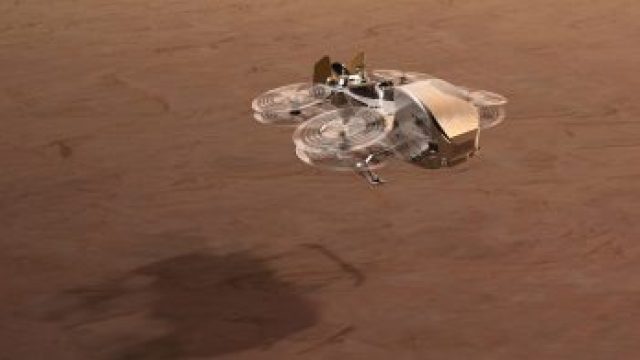
Titan, Saturn's largest moon, is enveloped in a thick atmosphere, presenting unique challenges and opportunities for scientific exploration. As NASA prepares for the Dragonfly mission, designated to launch in summer 2028 and reach Titan by late 2034, the selection of the landing site, Ahmakiq Undae, marks a pivotal moment in our quest to explore extraterrestrial environments.
Ahmakiq Undae is characterized by its stunning dunes and complex interdune regions. Located to the south of Selk Crater and near a mountainous area, the region offers diverse geological features that scientists are eager to study. The mission aims to analyze the composition of the surface and search for organic compounds, which could provide clues about the moon's potential for harboring life.
As we stand on the brink of a new era in space exploration, missions like Dragonfly are crucial for expanding our understanding of the universe. The exploration of Titan's atmosphere and surface could unveil secrets about prebiotic chemistry and the possibilities of life beyond Earth. In the context of global initiatives to explore outer space, the findings from Titan could influence future missions across the ASEAN region, particularly in countries like Indonesia, known for their growing interest in scientific research and space technology.
Equipped with cutting-edge technology, Dragonfly will be the first rotorcraft to fly on another planet. This innovative approach allows for flexible movement across the varied terrain of Titan, enabling scientists to gather data from multiple sites. By utilizing advanced instruments, Dragonfly aims to conduct in-situ analysis and send valuable information back to Earth.
The excitement surrounding the Dragonfly mission is palpable, with experts forecasting significant breakthroughs in our understanding of organic chemistry and planetary science. As the countdown to the 2028 launch begins, the scientific community is buzzing with anticipation over what discoveries await us on Titan.
The naming of Ahmakiq Undae is more than a mere milestone in the mission timeline; it signifies our ongoing journey to comprehend the cosmos. By delving into Titan's mysteries, we not only expand our knowledge of planetary science but also inspire future generations of scientists and explorers. The Dragonfly mission is set to pave the way for groundbreaking discoveries and foster international collaborations in space exploration, particularly within markets like Southeast Asia and Indonesia, where interest in such endeavors is rapidly growing.
Previous:The Epic Comeback of Garruk in